
The MycoMap BC Project was funded in part by a grant from the Metchosin Foundation. Launched in the fall of 2025, the Project has been a huge help in the survey of fungal species in Metchosin.
The MycoMap Project encourages iNaturalist users to not only record observations of fungal species, but also to collect and dry them (“voucher” them) and to submit the dried specimens for free genetic analysis. The barcode area of the fungus’s DNA is read (“sequenced”) and matched to databases of the barcodes (“validated”). In most cases, the exact species of the vouchered observations can be determined from the vouchering, sequencing, and validating, usually within three months of the observation. The results of these steps are added to the original observations, some automatically, some by hand. The data is then available for anyone to see, to be used for science, conservation, and projects such as the Metchosin Biodiversity Project.
Speaking of the Metchosin Biodiversity Project–before the BC MycoMap Project started, only about 30 different mushroom vouchers from Metchosin had been sequenced. Over the last six months, fourteen volunteers working within the project have submitted 845 more Metchosin vouchers for sequencing. Of these, just under half (about 400) had already been sequenced by the beginning of May 2026. Later this year, more will be vouchered, sequenced, and validated.
While we have Metchosin-based iNaturalist records for more than 1200 species of mushrooms and lichens, determining the exact species of any of these usually involves some guessing–fungi can be quite hard to ID to exact species with only field observation. The activities implemented in the MycoMap BC Project, with its vouchering, sequencing, and validating, remove a lot of this guesswork. Fungal identification is put on a par with some other groups, such as vascular plants and birds. As a result of the early stages of the MycoMap BC project, we already have secure records for 234 different fungal species within the District. INaturalist records of these sequenced species can be viewed here. These results have not only confirmed (and in a few cases disconfirmed) some of our Metchosin records, they have also added about 80 new fungal species to our Metchosin records.
Almost 37 of these 250 species have turned out to be the first iNaturalist records from BC (and usually from the whole of Canada) for those species. Some, in fact, were the first evidence of the fungal barcode ever found and could easily become, after they are formally described, entirely new species.
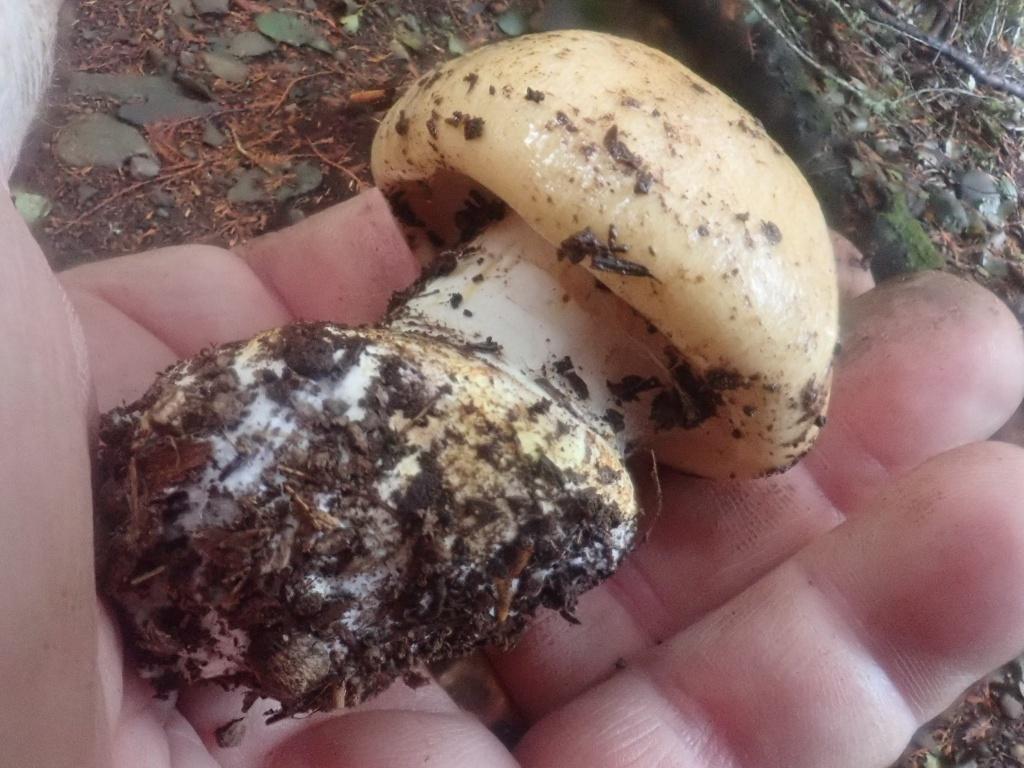
Here are a few of the more exciting finds (click on pictures to see the iNaturalist records):